
The First 15 Minutes Decide Everything: How GCC Legal Meetings Really Start
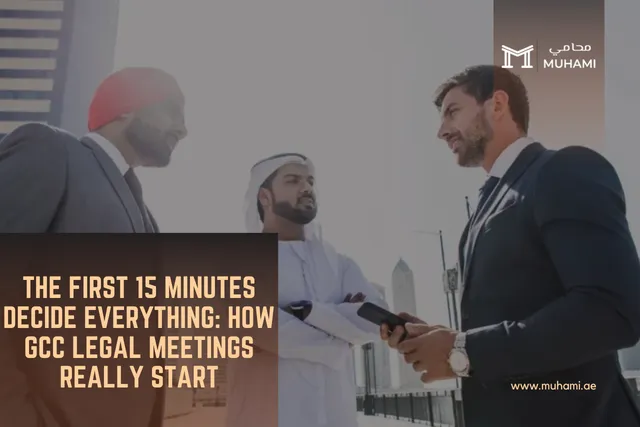
Many international lawyers walk into a Gulf client meeting and make the same silent mistake:
They treat the first 10–15 minutes as “small talk”, something to politely endure before “getting to the substance.”
In the GCC, those first minutes are often the substance.
They are where your client decides, quietly and quickly:
- Are you respectful?
- Are you safe?
- Do you understand how this market works?
- Will you protect me, not just legally, but socially and reputationally?
This edition of The GCC Legal Culture Review is about the real start of GCC meetings, and how to use it to build trust rather than accidentally signal “outsider.”
1) In the GCC, rapport is not extra; it’s due diligence
In many Western legal cultures, rapport is optional. Competence carries the meeting.
In the Gulf, rapport is part of competence.
Because relationships are the infrastructure through which business moves, small talk functions like a professional scan:
- your temperament
- your patience
- your respect for hierarchy
- your discretion
- your ability to “read the room”
A lawyer who rushes to the agenda can be perceived as:
- transactional
- impatient
- not fully respectful of the setting
- “here for the deal, not for us”
Practical shift: Stop thinking “small talk.” Start thinking: trust-setting.
2) The meeting has two agendas: the one you see and the one you don’t
The visible agenda is legal: timelines, clauses, approvals.
The invisible agenda is cultural:
- Who is aligned with whom?
- Who needs to look in control?
- Who needs to be consulted outside the room?
- What must not be said directly?
- What decision is actually possible today?
If you ignore the invisible agenda, you may leave with “agreement” that never becomes action.
What to do instead: Build space into your approach for the meeting that is happening under the meeting.
3) The Gulf “warm-up” isn’t random, it’s a sequence
There is often a natural rhythm. Not every meeting follows it exactly, but the pattern is common:
- Greeting + courtesy (and establishing respect)
- Context + relationship signals (how you’re positioned socially)
- Light business framing (non-threatening entry to the topic)
- Substance (once tone and hierarchy are settled)
Your job is to match the rhythm, not fight it.
A useful mental model:
In the GCC, you earn the right to be direct.
4) Micro-behaviours that matter more than you think
These aren’t “etiquette tips.” They’re signals that you’ll be trusted with sensitive matters.
Arrivals & greetings
- Stand when seniors enter.
- Don’t dominate the greeting; let your host lead the pace.
- If you know basic Arabic greetings, use them naturally (no performance).
Seating
- Don’t “choose” the power seat. Let it be offered.
- Pay attention to who sits where, it’s often the real org chart.
Coffee / hospitality
- Accepting hospitality is often a sign of respect (unless there’s a genuine reason not to).
- Don’t treat hospitality like an interruption; it’s part of the meeting’s social contract.
Phones
- Your phone on the table can read as: “you are not fully present.”
Titles
- In this region, titles are often a form of respect, not flattery. Use them where appropriate.
5) How to transition to substance without sounding abrupt
Many lawyers either:
- jump too quickly (“Shall we begin with clause 12?”), or
- stay in warm-up too long without direction.
A culturally aligned transition is warm + purposeful.
Try:
- “Thank you for making the time, I know you have many priorities.”
- “Perhaps we can start with the headline points, then go into detail where you’d like.”
- “Before we get into the documents, may I confirm what outcome matters most for you on this?”
This gives you permission to lead without appearing impatient.
6) The “private correction” rule: don’t embarrass people in public
A common failure mode for international counsel in the GCC is public correction:
- correcting a senior client in front of juniors
- challenging an assumption too directly
- exposing internal disagreement in a group setting
Even if you’re right, you may damage trust.
Better approach: Use a two-step method:
Public alignment (keep dignity intact)
- “Understood. That’s helpful context.”
Private calibration (where real clarity happens)
- “Could I suggest a quick word after this? There’s a risk point I want to flag carefully.”
This preserves face and still protects the client.
7) A GCC meeting checklist lawyers can actually use
Before
- Who is the real decision-maker? Who influences them?
- What cannot be said directly in the room?
- What are the client’s reputational sensitivities?
During
- Match the rhythm: greeting → rapport → framing → substance
- Watch who speaks last and who others defer to
- Be firm on substance, soft on surface
After
- Send a brief, respectful recap that can be forwarded upwards
- Keep sensitive corrections for a call or a private message
- Ask yourself: “Did I feel like a safe pair of hands?”
Any Questions?
Connect with lawyers and seek expert legal advice
Share
Find by Article Category
Browse articles by categories
Featured Partnership
She Knows Best
Anonymous Advice, For Women By Women
Related Articles

LEGAL SAFETY RULES — Issue 16 — The Rig…
There are two kinds of time most people never think about: Chronos and Kairos. …
LEGAL SAFETY RULES — Issue 16 — The Right Decisio…
There are two kinds of time most people never thi…
How to Choose a Commercial Lawyer in Du…
If you are comparing commercial lawyers in Dubai, finding names is rarely the p…
How to Choose a Commercial Lawyer in Dubai: Pract…
If you are comparing commercial lawyers in Dubai,…

Legal Safety Rules — Issue 11 When a…
There is a sentence people say every day, and almost no one imagines it could l…
Legal Safety Rules — Issue 11 When a Gift Beco…
There is a sentence people say every day, and alm…
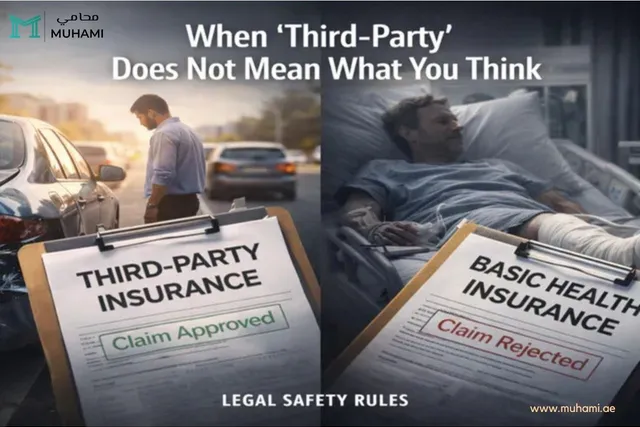
Legal Safety Rules — Issue 10 — When …
In a previous article, I shared a real story about insurance… and it re…
Legal Safety Rules — Issue 10 — When “Third-Par…
In a previous article, I shared a real story abou…
Legal Safety Rules — Issue 6 ---- Forc…
You may be hearing this more often these days… “Because of the cu…
Legal Safety Rules — Issue 6 ---- Force Majeure …
You may be hearing this more often these days&hel;…
Can two non-DIFC parties get a freezing…
What every business in Dubai needs to know about the DIFC Courts' expanding…
Can two non-DIFC parties get a freezing order in …
What every business in Dubai needs to know about …