
Legal Safety Rules — Issue 6 ---- Force Majeure Is Not What You Think
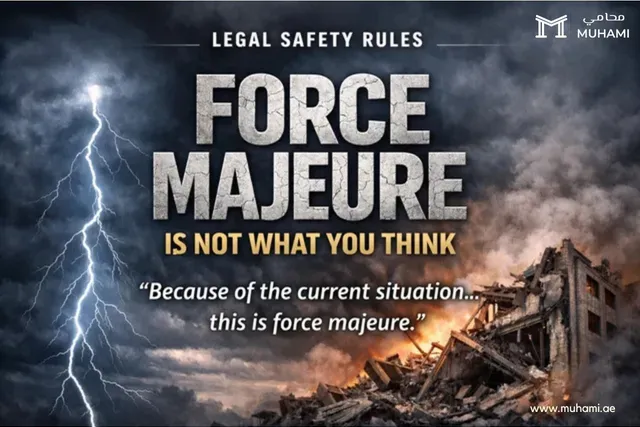
You may be hearing this more often these days…
“Because of the current situation… this is force majeure.”
With everything happening around us, many are quick to assume that any disruption automatically releases them from their obligations, but legally, it’s not that simple.
This is something many people misunderstand.
When things go wrong, the first reaction is often: “This was beyond my control.” And sometimes, that’s true.
But legally, that statement alone is not enough.
A contract is signed. Everything seems clear. Then something changes. A delay happens, costs increase, regulations shift, or a third party interferes. Suddenly, the agreement becomes difficult — or even impossible — to perform.
And this is where the confusion begins.
Most people assume all “unexpected events” are treated the same. They are not.
In legal reality, there are critical distinctions. A situation that makes performance impossible is not the same as one that makes it difficult. An external interference is not the same as a true force majeure event, and the consequences are very different.
In some cases, the contract may come to an end. In others, the obligation still exists but needs to be adjusted. And sometimes, responsibility may still remain, even when the situation feels unfair.
What makes the difference?
Not the event itself, but how it is legally classified.
From experience, many disputes do not arise because of the event, but because of the misunderstanding of it. One party assumes they are excused, the other disagrees, and what could have been managed early turns into a full legal conflict.
This is why clarity at the beginning matters. Because once things go wrong, it is often too late to redefine what should have been clear from the start.
Smart Question:
If something unexpected happens tomorrow — would your contract protect you, or expose you?
Clarity is not created during a crisis. It is written before it.
If you are unsure where your contracts stand, it may be time to review them.
Taghreed Abu Shehadah
Legal & Business Support Advisory Specialist
Legal Safety Rules is shared for educational awareness purposes only and does not constitute legal advice for any specific case.
This article is part of my Legal Safety Rules series — where I share real-life situations that may carry legal consequences people often overlook.
If this resonated with you, you can explore the full series here:
👉 https://muhami.ae/partnerships/new-chapter-advisory/
Any Questions?
Connect with lawyers and seek expert legal advice
Share
Find by Article Category
Browse articles by categories
Related Articles
What Most People Don't Know About CBDCs
Imagine waking up one morning to discover that the cash in your wallet has beco…
What Most People Don't Know About CBDCs
Imagine waking up one morning to discover that th…
Family Foundations & Tax treatment in t…
A correctly structured Family Foundation can be a powerful tool for holding U…
Family Foundations & Tax treatment in the UAE
A correctly structured Family Foundation can be…

Accepting Crypto Payments in the UAE: M…
Quick Answer A UAE business cannot simply accept cryptocurrency for its good…
Accepting Crypto Payments in the UAE: Merchant Sa…
Quick Answer A UAE business cannot simply acce…
LEGAL SAFETY RULES — Issue 17 — When …
At the airport, everything moves quickly. A long queue. A sli…
LEGAL SAFETY RULES — Issue 17 — When a Simple F…
At the airport, everything moves quickly. …
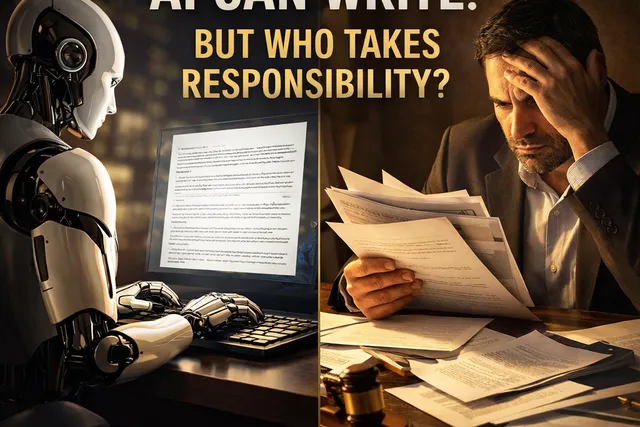
LEGAL SAFETY RULES — Issue 18 — AI Ca…
There is a growing trend that many people do not talk about enough. Wh…
LEGAL SAFETY RULES — Issue 18 — AI Can Write. B…
There is a growing trend that many people do not …
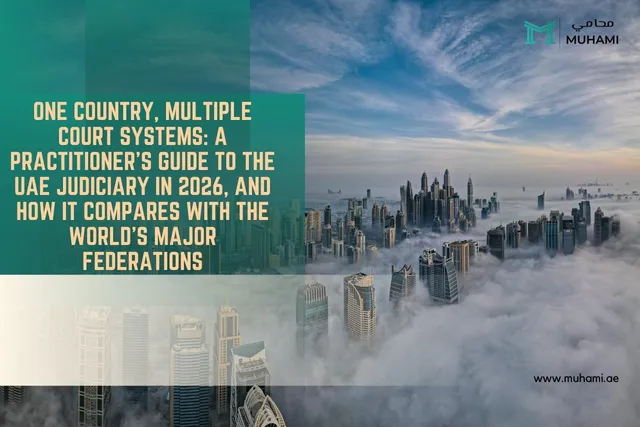
One Country, Multiple Court Systems: A …
Ask a newly arrived general counsel to sketch the UAE court system on a whitebo…
One Country, Multiple Court Systems: A Practition…
Ask a newly arrived general counsel to sketch the…