
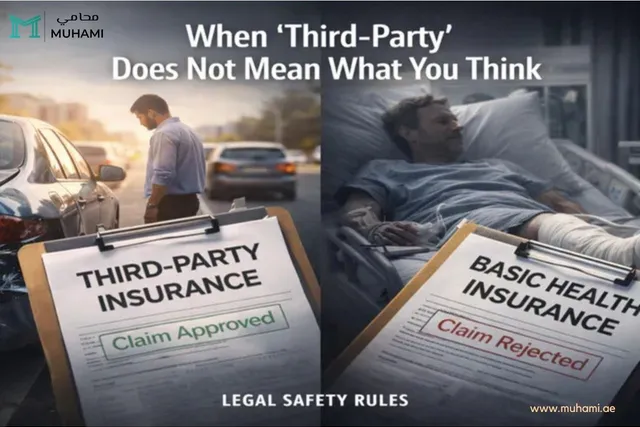
Legal Safety Rules — Issue 10 — When “Third-Party” Does Not Mean What You Think
In a previous article, I shared a real story about insurance…
and it revealed something many people misunderstand.
There is a common misunderstanding…
and it is more dangerous than it appears.
Many people believe that having insurance means being protected.
And when they hear “third-party insurance,”
it sounds sufficient.
It sounds official.
It sounds safe.
But it is not.
Third-party insurance is designed to protect others…
not you.
If you cause damage to someone else,
their loss may be covered.
But your own loss?
Your injuries?
Your repairs?
That is a different story.
And this is where confusion becomes risk.
Because the name creates a sense of comfort…
that the coverage does not always support.
You may remember the story I shared earlier…
where someone believed he was protected — until he wasn’t.
That moment is not rare.
It happens more often than people think.
Not because insurance failed…
but because it was misunderstood.
And this does not apply to car insurance alone.
The same pattern appears in health insurance.
Basic plans often look acceptable.
Until you need them.
And then you discover:
Certain hospitals are not included.
Specific treatments are excluded.
Coverage limits are reached faster than expected.
On paper, everything seems fine.
In reality…
the protection is conditional.
Insurance is not about names.
It is about details.
What exactly is covered?
What exactly is excluded?
Where are the limits?
Because the gap between what you believe
and what is actually written
is where most problems begin.
Choosing insurance should never be rushed.
It is not a financial formality.
It is a legal and practical decision.
Because the real value of insurance
is not tested when everything is working.
It is tested when something goes wrong.
And in that moment…
you do not need assumptions.
You need certainty.
Smart Question:
Do you understand what your insurance actually protects…
or only what it is called?
Clarity is protection.
Sometimes, a short review of your current policy reveals more than expected.
Taghreed Abu Shehadah
Legal & Business Support Advisory Specialist
Legal Safety Rules is shared for educational awareness purposes only and does not constitute legal advice for any specific case.
This article is part of my Legal Safety Rules newsletter — where I share real-life situations that may carry legal consequences people often overlook.
If this resonated with you, you can explore the full series here:
👉 https://muhami.ae/partnerships/new-chapter-advisory/
Any Questions?
Connect with lawyers and seek expert legal advice
Share
Find by Article Category
Browse articles by categories
Related Articles
What Most People Don't Know About CBDCs
Imagine waking up one morning to discover that the cash in your wallet has beco…
What Most People Don't Know About CBDCs
Imagine waking up one morning to discover that th…

Family Foundations & Tax treatment in t…
A correctly structured Family Foundation can be a powerful tool for holding U…
Family Foundations & Tax treatment in the UAE
A correctly structured Family Foundation can be…

Accepting Crypto Payments in the UAE: M…
Quick Answer A UAE business cannot simply accept cryptocurrency for its good…
Accepting Crypto Payments in the UAE: Merchant Sa…
Quick Answer A UAE business cannot simply acce…
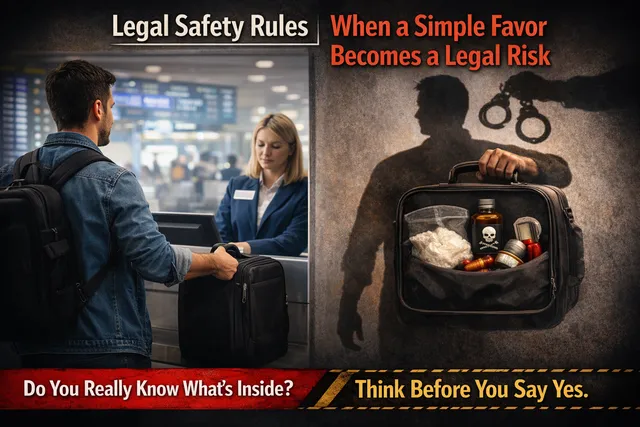
LEGAL SAFETY RULES — Issue 17 — When …
At the airport, everything moves quickly. A long queue. A sli…
LEGAL SAFETY RULES — Issue 17 — When a Simple F…
At the airport, everything moves quickly. …
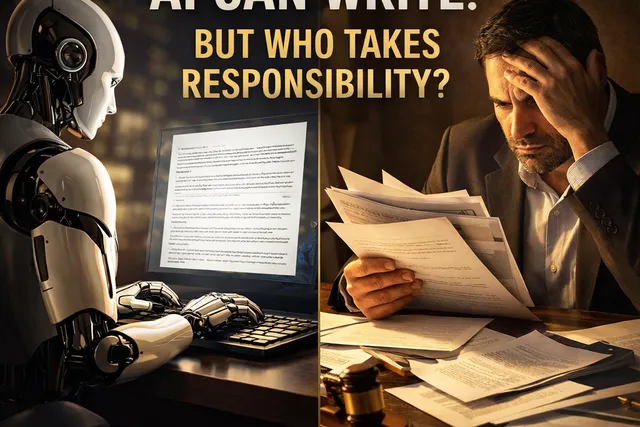
LEGAL SAFETY RULES — Issue 18 — AI Ca…
There is a growing trend that many people do not talk about enough. Wh…
LEGAL SAFETY RULES — Issue 18 — AI Can Write. B…
There is a growing trend that many people do not …
One Country, Multiple Court Systems: A …
Ask a newly arrived general counsel to sketch the UAE court system on a whitebo…
One Country, Multiple Court Systems: A Practition…
Ask a newly arrived general counsel to sketch the…