
Risk Allocation in Commercial Contracts: Why Your Deal Is Won or Lost Before It Even Begins
In today’s volatile global environment—whether driven by geopolitical tensions, supply chain disruptions, or financial uncertainty—one truth remains constant:
Events do not determine commercial outcomes. They are determined by how risk for those events was allocated in the contract.
This is where most businesses and even seasoned investors get it wrong.
Contracts Are Not Documents. They Are Risk Maps.
At its core, every commercial contract is a negotiated risk allocation framework.
Each party enters a transaction with one objective:
- Minimise its own Exposure
- Maximise its commercial upside
But here’s the reality:
Risk is never eliminated; it is transferred.
When one party reduces its risk, the other party inevitably assumes more.
This tension is what defines commercial negotiations.
The 6 Core Tools of Risk Allocation
Understanding these is what separates a transactional lawyer from a strategic advisor:
1. Indemnity – The Ultimate Risk Transfer Tool
Indemnity provisions allow one party to bear the financial consequences of specific risks.
A well-drafted indemnity can:
- Shift liability completely
- Cover third-party claims
- Include legal costs that may not otherwise be recoverable
The broader the wording, the greater the risk assumed.
2. Limitation of Liability – Controlling Exposure
This is where parties define:
- What damages are excluded
- How much liability is capped
Without this, Exposure can become commercially disproportionate to the deal itself.
3. Termination Rights – The Real Leverage Clause
Termination is not just an exit—it is power.
- Termination for cause protects against breach.h
- Termination for convenience creates strategic leverage
The party with stronger termination rights controls the deal dynamics
4. Force Majeure – Not a Safety Net (Unless Drafted Properly)
One of the most misunderstood clauses.
Force majeure:
- Only applies to events explicitly defined
- Does NOT automatically apply to “difficult situations”
If it’s not written, it doesn’t exist.
5. Contractual Remedies – Defining Consequences
Contracts can:
- Expand remedies
- Limit remedies
- Or make certain remedies exclusive
This determines: What you actually recover when things go wrong
6. Insurance – Shifting Risk Outside the Contract
Here, risk is transferred to a third party (insurer).
But: Insurance is only effective if aligned with contractual liability
The Most Important Insight
The contract overrides assumptions. Always.
Not:
- Market conditions
- Economic pressure
- Emotional decisions
But: What was negotiated and agreed
This is why we consistently advise clients:
“Before reacting to a situation, go back to the contract. That is where your rights live.”
Why This Matters More Today Than Ever
In the current environment, we are seeing:
- Buyers attempting to exit transactions, citing uncertainty
- Developers relying strictly on contractual obligations
- Disputes arising not from events, but from misunderstanding risk
The reality is simple:
If the contract allocated the risk to you, you carry it—regardless of external circumstances.
Our Approach
At ASK Consultancy, we don’t just review contracts.
We:
- Decode risk structures
- Identify hidden Exposure
- Strategically position clients before disputes arise
Because by the time a dispute begins, the contract has already decided most of the outcome.
Final Thought
“In commercial transactions, success is not about avoiding risk—it is about knowing exactly where that risk sits.”
Any Questions?
Connect with lawyers and seek expert legal advice
Share
Find by Article Category
Browse articles by categories
Featured Partnership
She Knows Best
Anonymous Advice, For Women By Women
Related Articles
LEGAL SAFETY RULES — Issue 16 — The Rig…
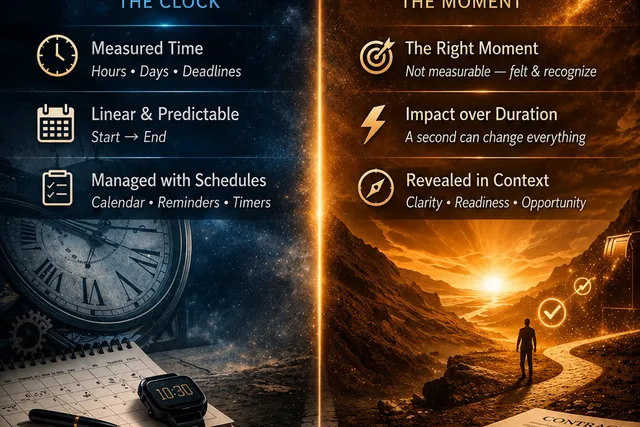
There are two kinds of time most people never think about: Chronos and Kairos. …
LEGAL SAFETY RULES — Issue 16 — The Right Decisio…
There are two kinds of time most people never thi…
How to Choose a Commercial Lawyer in Du…
If you are comparing commercial lawyers in Dubai, finding names is rarely the p…
How to Choose a Commercial Lawyer in Dubai: Pract…
If you are comparing commercial lawyers in Dubai,…
What the Estée Lauder Settlement Really…
In today’s market, investor relations extend beyond just numbers. The rec…
What the Estée Lauder Settlement Really Teaches I…
In today’s market, investor relations exten…
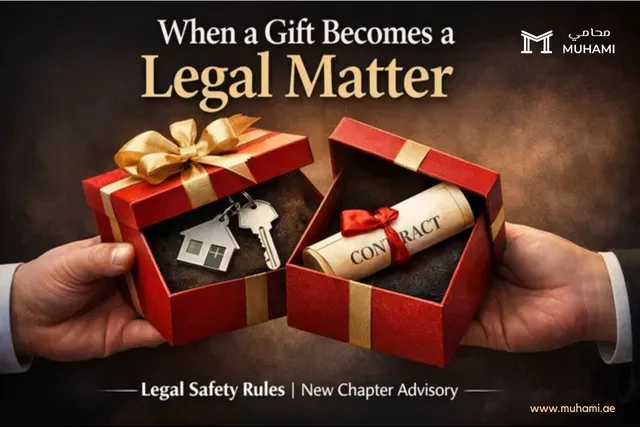
Legal Safety Rules — Issue 11 When a…
There is a sentence people say every day, and almost no one imagines it could l…
Legal Safety Rules — Issue 11 When a Gift Beco…
There is a sentence people say every day, and alm…
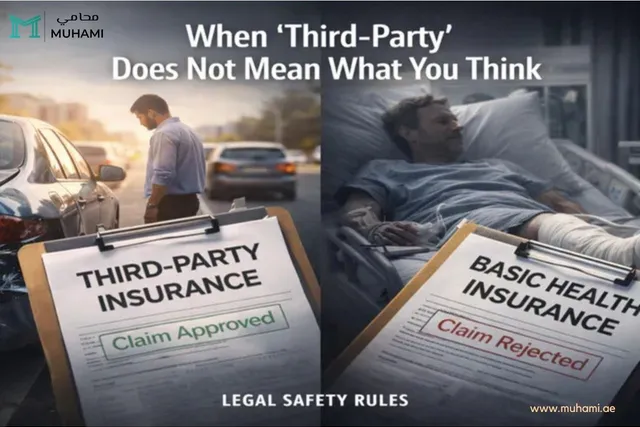
Legal Safety Rules — Issue 10 — When …
In a previous article, I shared a real story about insurance… and it re…
Legal Safety Rules — Issue 10 — When “Third-Par…
In a previous article, I shared a real story abou…
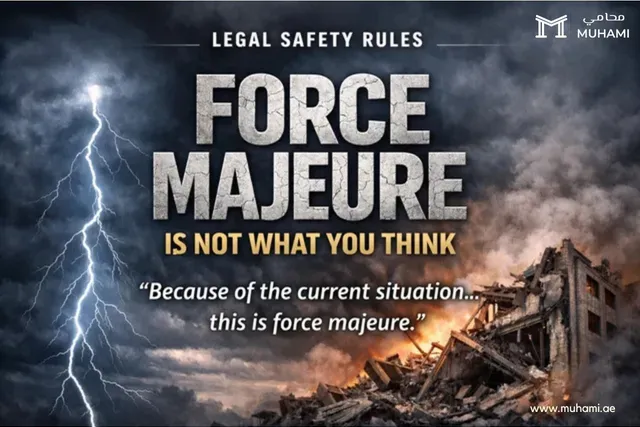
Legal Safety Rules — Issue 6 ---- Forc…
You may be hearing this more often these days… “Because of the cu…
Legal Safety Rules — Issue 6 ---- Force Majeure …
You may be hearing this more often these days&hel;…