
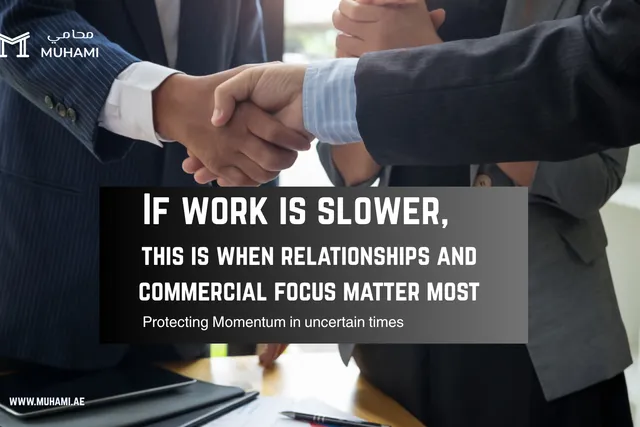
If work is a little slow, this is when relationships and commercial focus matter most
It is fair to say there have been some disruptions to business as usual over the past couple of months.
A number of businesses are seeing slower movement, delayed decisions and work being put on hold.
That naturally leads to caution.
But if work is slower right now, this is not the moment to disappear!
What I often see is businesses responding to uncertainty by pulling back across the board. They cut spend, reduce output and go quieter in the market because it feels like the sensible thing to do.
Sometimes some of that is sensible.
But the issue is usually not caution itself. The issue is cutting commercial activity without being clear on what still needs protecting.
For professional services businesses, especially those built on trust, reputation and relationships, going too quiet at the wrong moment can create a second problem. The immediate slowdown is one thing. The weaker pipeline three months later is another.
That is why slower periods are not the time to disappear. They are the time to get more deliberate.
The answer is not a bigger budget. It is sharper commercial focus.
A common mistake is to treat all marketing and business development activity as optional the moment the market feels less certain.
It is not.
Some activity probably should be reduced. Some should stop entirely. But some needs protecting because it is the part that keeps relationships warm, keeps your business visible and keeps future work moving even when current decisions are slower than usual.
That distinction matters.
When buyers are hesitant, broad activity tends to become less effective on its own. Generic visibility, generic outreach and generic noise rarely create much confidence. What tends to matter more is relevance, familiarity and trust.
That means the businesses that navigate these periods better are often not the ones doing more. They are the ones doing less, but with more judgement.
- They stay in touch with the right people.
- They follow up properly.
- They remain visible in ways that reinforce credibility.
- They keep good relationships active instead of assuming those relationships will still be there later.
- They make clearer choices about where future work is most likely to come from.
This matters because pipeline often weakens quietly before it weakens visibly.
You may still be busy this month. You may still have work on the table. But if conversations slow, introductions reduce and follow-up becomes inconsistent, the gap usually appears later.
That is why it helps to think in three-month terms.
If the market feels slower today, the question is not only what needs cutting now. The better question is:
What do we still need to be doing now if we want work three months from now?
That changes the decision.
It moves the conversation away from blanket cuts and towards commercial priorities.
You may decide that some spend is not justified.
You may decide that some channels are not producing enough.
You may decide that some activity has become habitual rather than useful.
All of that can be true.
But the real risk is unfocused retreat. Cutting things because pressure is rising without deciding what role they play in future pipeline.
In practice, most businesses do not need more activity in periods like this. They need better protection of the activity that matters most.
That usually includes a few things.
First, relationship maintenance.
Not performative networking. Not superficial check-ins. Real relationship care with clients, referrers, collaborators and useful market contacts. The people who already know you, trust you or are one step away from sending work.
Second, follow-up discipline.
A lot of future work does not disappear. It drifts. It gets delayed, deprioritised or lost in someone else’s internal uncertainty. Businesses that keep sensible contact, stay relevant and make it easy to restart the conversation are often in a stronger position when work begins moving again.
Third, visibility with a point.
This is not about posting for the sake of it. It is about staying present in a way that reinforces how you think, what you help with and why you are credible. When buyers are cautious, confidence matters. Familiarity matters. Commercial clarity matters.
Fourth, better decisions about where to focus.
Not every service line, market segment, relationship type or channel deserves equal protection. Slower periods usually expose where a business has been spreading effort too thinly. This is often the right time to get clearer about which relationships, offers and growth routes are commercially worth defending.
That is the real work.
Not panic. Not noise. Not pretending everything should continue as before.
-
Clearer choices.
-
Protected momentum.
-
Commercial discipline.
The businesses that come through slower periods best are usually not the ones that kept spending freely. They are the ones that stayed intentional while others became either reactive or invisible.
- They protected the right conversations.
- They kept the right relationships alive.
- They maintained enough visibility to stay credible and remembered.
- They did not confuse cost control with commercial withdrawal.
That matters because when the market is cautious, trust does more work.
People move more slowly. Decisions take longer. Internal sign-off gets harder. Projects pause. Risk tolerance drops.
In that kind of environment, relationships are not a soft extra. They are part of the commercial infrastructure that keeps future work possible.
So yes, be cautious.
But be careful what you cut.
Because if work is slower now, this is exactly when relationships and commercial focus matter most.
And if you are going to reduce activity, do it with judgement.
- Know what you are protecting.
- Know what you are stopping.
- Know where future work is most likely to come from.
That is a much stronger response than simply going quiet and hoping demand returns on its own.
If your business is in that position right now, and you need to get clearer on what to keep funding, what to stop and where future work is most likely to come from, that is exactly the kind of issue I help work through.
A Clarity Session gives you the space to step back, identify the real constraint and make better commercial decisions about what to focus on next.
Any Questions?
Connect with lawyers and seek expert legal advice
Share
Find by Article Category
Browse articles by categories
Find Article by Practice Area
Browse articles by practice area
Related Articles
LEGAL SAFETY RULES — Issue 16 — The Rig…
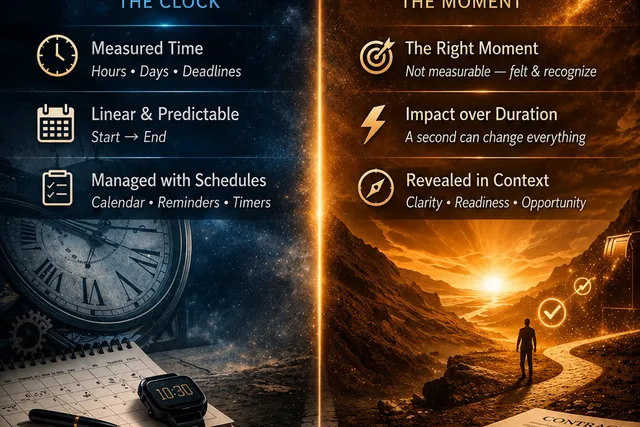
There are two kinds of time most people never think about: Chronos and Kairos. …
LEGAL SAFETY RULES — Issue 16 — The Right Decisio…
There are two kinds of time most people never thi…

Debt Collection vs Debt Recovery in the…
If you run a business in the UAE for long enough, you will eventually face the …
Debt Collection vs Debt Recovery in the UAE: What…
If you run a business in the UAE for long enough,…

How to Choose a Commercial Lawyer in Du…
If you are comparing commercial lawyers in Dubai, finding names is rarely the p…
How to Choose a Commercial Lawyer in Dubai: Pract…
If you are comparing commercial lawyers in Dubai,…

Legal Safety Rules — Issue 11 When a…
There is a sentence people say every day, and almost no one imagines it could l…
Legal Safety Rules — Issue 11 When a Gift Beco…
There is a sentence people say every day, and alm…

Legal Safety Rules — Issue 10 — When …
In a previous article, I shared a real story about insurance… and it re…
Legal Safety Rules — Issue 10 — When “Third-Par…
In a previous article, I shared a real story abou…

Legal Safety Rules — Issue 6 ---- Forc…
You may be hearing this more often these days… “Because of the cu…
Legal Safety Rules — Issue 6 ---- Force Majeure …
You may be hearing this more often these days&hel;…