
Disputes in the GCC: How to Escalate Without Detonating the Relationship
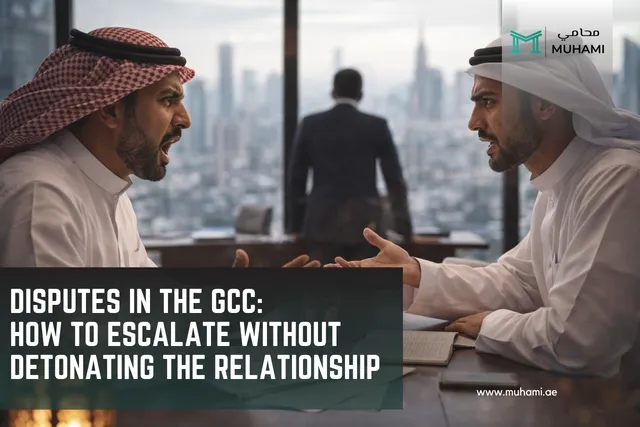
In many markets, disputes are treated as a technical process:
issue → notice → claim → litigation/arbitration.
In the GCC, disputes are often also a social event.
They can reshape relationships, reputations, and future access to decision-makers. That means escalation is not only a legal strategy, it is a cultural strategy.
This edition of The GCC Legal Culture Review is about managing conflict in the Gulf: how to apply pressure without humiliation, how to preserve settlement pathways, and how to remain “trusted counsel” even when things turn adversarial.
(As always: this is cultural strategy, not legal advice.)
1) The GCC escalation ladder is different
In many Western contexts, a strong legal letter is an opening move.
In the GCC, jumping straight to formal escalation can be read as:
- disrespect
- impatience
- lack of relationship investment
- an attempt to shame the other side
That doesn’t mean you never escalate. It means you do it in the right sequence.
A culturally common escalation ladder:
- Private conversation (test intentions, allow face-saving)
- Trusted intermediary (when direct tension is high)
- Formal notice (when you’ve signalled seriousness)
- Proceedings (once pathways to dignified settlement are narrowed)
The lawyer’s role is often to keep the client strong without making them look emotionally reactive.
2) The “face” principle: pressure that humiliates often backfires
In the GCC, a party may accept a painful compromise privately, but resist fiercely if they feel embarrassed publicly.
So the question becomes:
How do we apply leverage while preserving dignity?
A powerful technique is to frame firm moves as protection, not aggression:
- “We need to protect our position.”
- “We must be able to demonstrate we acted responsibly.”
- “We want to resolve this directly and respectfully, but we have to keep our options open.”
This language communicates seriousness without theatrical hostility.
3) The settlement path should never be burned too early
Many disputes in the Gulf settle, not because the merits are weak, but because:
- business relationships matter
- reputational exposure is costly
- decision-makers prefer control over uncertainty
- the market is small and memory is long
So even if you prepare for proceedings, preserve a settlement channel.
Two practical moves:
A) Keep one “clean” communication line
- One channel that is respectful, controlled, and forwardable to senior stakeholders.
B) Preserve a dignified off-ramp
- “If your team would like a private discussion to resolve this quietly, we are open to it.”
This isn’t weakness. It’s strategy.
4) Don’t confuse silence with surrender
One of the most common misreads in GCC disputes is silence.
Silence can mean:
- internal consultation is happening
- a senior decision-maker hasn’t weighed in yet
- they’re waiting to see if you escalate
- they are seeking a face-saving angle
What tends to work better than repeated chasing is a calibrated question:
- “Who needs to be comfortable internally for this to be resolved?”
- “What would a workable solution look like from your side?”
- “Is there a concern we haven’t discussed openly that’s blocking movement?”
You are inviting the real issue to surface without cornering them.
5) Use the “principals and protectors” model
In many GCC disputes, there are two layers:
- Principals: the true decision-makers (owners, senior executives, key officials)
- Protectors: people around them who manage risk, optics, and loyalty (senior advisers, chiefs of staff, trusted consultants)
Your counterparty on email may be neither.
So ask yourself:
- Who is the principal?
- Who is protecting them?
- What outcome allows the principal to “win” socially even if they concede economically?
A settlement is often designed not only around money, but around status, narrative, and dignity.
6) “Strong but respectful”: dispute language that lands in the GCC
Here are culturally aligned frames that communicate strength without antagonism:
- “We want to resolve this directly and respectfully.”
- “We must protect our position, but we prefer to keep this out of formal channels if possible.”
- “Let’s find a solution that both sides can stand behind.”
- “We are prepared to take the necessary steps, but we would rather conclude this in a way that preserves the relationship.”
Compare that with language that often escalates emotion unnecessarily:
- “This is a final notice.”
- “Your conduct is unacceptable.”
- “We will commence proceedings immediately.”
Sometimes you must be direct, but in the Gulf, direct can still be dignified.
7) A dispute calibration checklist for GCC matters
Before your next escalation step, ask:
- Will this message embarrass the other side if forwarded to seniors?
- Are we applying pressure in a way that allows a face-saving solution?
- Have we preserved a private route to settlement?
- Are we escalating because it’s strategic, or because we’re frustrated?
- Are we thinking in “court logic” only, or also in “market memory” logic?
In the Gulf, winning the dispute but losing the relationship can be a very expensive victory.
Subscribe for daily, one-minute cultural dispute instincts
If you want daily short, sharp, native insights on how conflict, escalation and settlement really work in the GCC - always less than a minute to read - subscribe to The Souk Secrets.
It’s built for busy professionals who need cultural instincts fast, not long theory.
Any Questions?
Connect with lawyers and seek expert legal advice
Share
Find by Article Category
Browse articles by categories
Find Article by Practice Area
Browse articles by practice area
Featured Partnership
Lawcloud
LawCloud: All-in-One Legal Practice Software
Related Articles

LEGAL SAFETY RULES — Issue 16 — The Rig…
There are two kinds of time most people never think about: Chronos and Kairos. …
LEGAL SAFETY RULES — Issue 16 — The Right Decisio…
There are two kinds of time most people never thi…
If work is a little slow, this is when …
It is fair to say there have been some disruptions to business as usual over th…
If work is a little slow, this is when relationsh…
It is fair to say there have been some disruption…
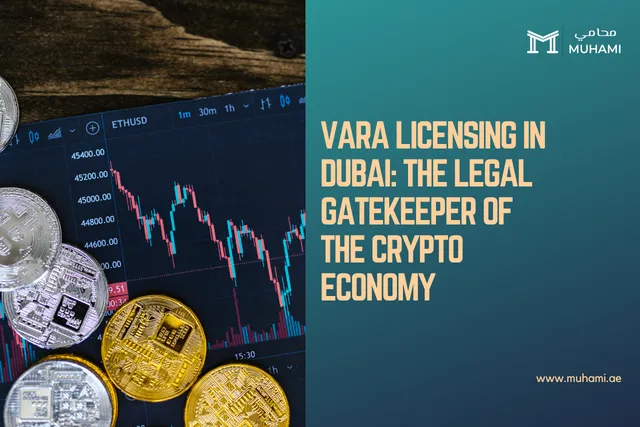
VARA Licensing in Dubai: The Legal Gate…
Dubai didn't just open its doors to crypto - it engineered one of the world…
VARA Licensing in Dubai: The Legal Gatekeeper of …
Dubai didn't just open its doors to crypto - …

Risk Allocation in Commercial Contracts…
In today’s volatile global environment—whether driven by geopolitic…
Risk Allocation in Commercial Contracts: Why Your…
In today’s volatile global environment&mdas;…
The Quiet Exit: How Gulf Clients Fire Y…
The relationship seemed fine. Emails were being returned. Work was being del…
The Quiet Exit: How Gulf Clients Fire You (And Yo…
The relationship seemed fine. Emails were bein…

The Referral Reality: Why Your Best Gul…
You've done excellent work for a Gulf client. They're genuinely pleased…
The Referral Reality: Why Your Best Gulf Clients …
You've done excellent work for a Gulf client.…