
The Quiet Exit: How Gulf Clients Fire You (And You Never See It Coming)

The relationship seemed fine.
Emails were being returned. Work was being delivered. The client was polite, even warm. There were no complaints, no confrontations, no indication anything was wrong.
Then one day, you realize: the calls have stopped coming. The new matters are going elsewhere. When you reach out, responses are friendly but vague. "Let's catch up soon." "Things are just busy right now."
And slowly, painfully, you understand: you've been let go. Not fired explicitly. Just, quietly exited.
If you've worked in the Gulf long enough, you've either experienced this or watched it happen to colleagues who never understood what went wrong. Because in the Gulf, clients rarely fire advisors the way Western firms expect. There's no performance review. No difficult conversation. No clear ending.
There's just distance. And by the time you notice it, it's often too late to recover.
Here's what you missed while it was happening, and the warning signs that could have saved the relationship if you'd caught them early.
Why Gulf Clients Exit Silently
Before understanding the stages, you need to understand why this happens the way it does.
In Western business culture, confrontation is often seen as professional. If something isn't working, you address it directly. "Here's the issue, here's what needs to change."
In Gulf culture, direct confrontation - especially with someone you've worked with - risks causing embarrassment and damaging face. For many Gulf clients, it's easier and more culturally comfortable to simply redirect future work than to have a difficult conversation about why you're no longer their first choice.
This isn't avoidance. It's preservation of dignity, yours and theirs.
The challenge for advisors is that without that direct feedback, you can miss the entire drift until the relationship is already lost.
The Stages of the Quiet Exit (And the Warning Signs You're Missing)
Stage 1: The Subtle Cooling
The relationship hasn't ended. But something has shifted. Responses take a bit longer. Meetings get rescheduled more often. The warmth that used to be there feels slightly more formal.
Warning signs you're probably missing:
- They used to reply within hours/next day; now it's consistently longer
- Your check-in messages get brief, polite responses with no follow-up questions
- You're no longer getting the casual "thinking about X, what's your view?" calls
- When you suggest meeting, they agree but don't propose specific dates
What's actually happening: The client is creating space. Something didn't sit right, maybe a missed cultural cue, maybe a moment where you seemed too transactional, maybe they felt pushed when they needed patience. They're not ready to exit yet, but they're testing whether the issue was a one-time thing or a pattern.
What to do if you catch it here: Don't ignore the shift. Acknowledge it gently. "I've noticed we haven't connected as much recently, just wanted to check in and make sure everything is aligned on our end." This gives them a face-saving way to surface concerns if they're open to it.
Stage 2: The Parallel Advisor
You're still getting work, but you notice mentions of another advisor. "We're also working with [Name] on something similar." Or you find out after the fact that they engaged someone else for a matter you would have expected to handle.
Warning signs you're probably missing:
- New matters that clearly fit your expertise are going elsewhere
- The client mentions other advisors casually, testing your reaction
- You're being used for narrow, technical work but not strategic conversations
- They're suddenly very interested in your conflicts check before sharing details
What's actually happening: They're auditioning your replacement. Not necessarily because they've decided to exit, but because they want options. This is the testing phase. They're comparing how the new advisor makes them feel versus how you make them feel.
What to do if you catch it here: Don't get defensive or territorial. Instead, demonstrate the invisible work that matters: "Happy you're getting good support on that. If there's ever anything where having continuity with our work would help, just let me know." You're signaling confidence and client-centeredness, not possessiveness.
Stage 3: The Drift
The work has essentially stopped coming. When you reach out, everything is "on hold" or "we'll reconnect soon." The relationship isn't formally ended, but it's functionally over.
Warning signs you're probably missing:
- Three months have passed with no new instructions
- Your attempts to schedule catch-up calls keep getting postponed
- They're polite but vague when you ask about upcoming work
- You hear through the market that they've formalized with another advisor
What's actually happening: The exit is complete, but they're avoiding the explicit conversation. They've made their decision. The new advisor is handling what you used to handle. But because there was no confrontation, you're left in limbo wondering if the relationship might revive.
What to do if you catch it here: This is the hardest stage to recover from, but not impossible.
One clear, honest message can sometimes reset things: "I've noticed we haven't worked together in some time. If there's something we could have done better, I'd genuinely value knowing, not to win the work back, but to improve. If the fit has simply changed, I completely understand and wish you well." This gives them permission to either exit cleanly or, occasionally, to surface what went wrong if it's fixable.
The One Thing That Can Turn It Around (If You Catch It Early)
Here's what I've learned from watching relationships recover after entering Stage 1 or early Stage 2:
The advisors who save the relationship don't try to sell harder. They don't pitch new services. They don't chase.
They do the opposite: they demonstrate presence without pressure.
A brief check-in with no ask. An insight shared because it's genuinely useful, not because you're angling for work. A moment of visibility that reminds the client why they valued you in the first place, not your technical skill, but the way you make them feel seen, supported, and safe.
If the drift was caused by something fixable - a moment where you seemed too transactional, or too pushy, or not culturally attuned - this kind of presence can recalibrate the relationship.
If the drift is because they genuinely need a different kind of advisor, this approach lets you exit with dignity intact and the door open for future work.
What You Need to Accept
Not every relationship is meant to last forever. Sometimes clients outgrow advisors. Sometimes their needs change. Sometimes the chemistry was never quite right, even if the work was good.
The painful part about the quiet exit isn't that it happens. It's that you don't see it coming and can't course-correct.
So watch for the stages. Notice the cooling. Pay attention when parallel advisors appear. Don't wait until Stage 3 to realize something shifted.
And most importantly: build relationships where clients feel comfortable telling you when something isn't working, instead of just drifting away.
Because in the Gulf, the advisors who last aren't the ones who never make mistakes. They're the ones clients trust enough to tell when something needs to change, before the quiet exit becomes inevitable.
Until next week,
For daily insights: head to The Souk Secrets. Observations on GCC culture and professional relationships, always practical, always brief.
Any Questions?
Connect with lawyers and seek expert legal advice
Share
Find by Article Category
Browse articles by categories
Related Articles
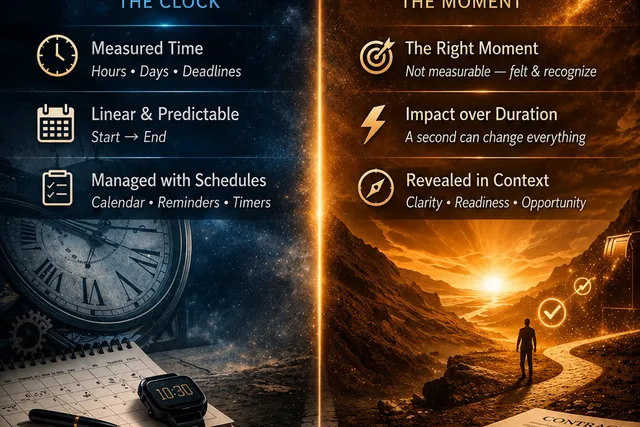
LEGAL SAFETY RULES — Issue 16 — The Rig…
There are two kinds of time most people never think about: Chronos and Kairos. …
LEGAL SAFETY RULES — Issue 16 — The Right Decisio…
There are two kinds of time most people never thi…

How to Choose a Commercial Lawyer in Du…
If you are comparing commercial lawyers in Dubai, finding names is rarely the p…
How to Choose a Commercial Lawyer in Dubai: Pract…
If you are comparing commercial lawyers in Dubai,…
Can two non-DIFC parties get a freezing…
What every business in Dubai needs to know about the DIFC Courts' expanding…
Can two non-DIFC parties get a freezing order in …
What every business in Dubai needs to know about …

If work is a little slow, this is when …
It is fair to say there have been some disruptions to business as usual over th…
If work is a little slow, this is when relationsh…
It is fair to say there have been some disruption…

VARA Licensing in Dubai: The Legal Gate…
Dubai didn't just open its doors to crypto - it engineered one of the world…
VARA Licensing in Dubai: The Legal Gatekeeper of …
Dubai didn't just open its doors to crypto - …

Risk Allocation in Commercial Contracts…
In today’s volatile global environment—whether driven by geopolitic…
Risk Allocation in Commercial Contracts: Why Your…
In today’s volatile global environment&mdas;…