
Terms & Conditions: the operational foundation many businesses overlook
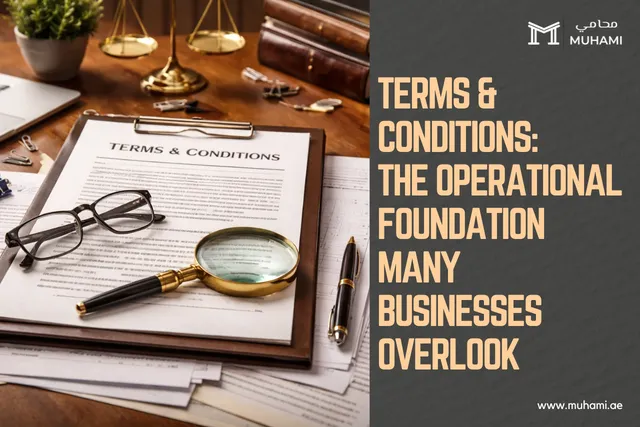
If you are offering online services, subscriptions, communities, or downloadable resources, terms and conditions form a necessary foundation.
Imagine you’ve just launched a new service. You’ve invested in a proper advertising and marketing campaign, matching the message to the market. Sales are rolling in. Deposits are paid and customers are excited. Everything is going great. A month later, sales are still coming in. That feeling of success motivates you to plan out your expansion.
One day, you wake up to a message you didn’t expect to see. One of your first clients, someone you were sure was going to be one of the best, says they’re not getting results. Then they demand an immediate refund and threaten a chargeback if you refuse. Not long after, a member posts abusive content in your community and scares others away, causing refund requests in the process. Someone takes advantage of the disruption by reselling your worksheets in their own community and claims the work is “theirs.” The level of uncertainty starts to feel unbearable, even though just weeks before you were on top of the world. Now you have to pause your expansion planning. What could have prevented all of this?
The rules of the relationship: Terms & Conditions
Like any well-run relationship, terms set boundaries around what is acceptable and what is not. Terms and Conditions (T&Cs), or terms, are a practical tool for making that clear. They are most common in business-to-consumer (B2C) relationships, particularly where businesses offer one-time services or recurring subscriptions. However, those terms often apply to both individuals and small businesses, rather than enterprise customers with bespoke agreements.
You may have seen “Terms & Conditions” shown at the bottom of a website, when you’ve installed some new software on your computer, registered for an account on a research service, marketplace, or community. So for your business, it could be anywhere people would use what you provide, especially if they have accounts to use the service, pay you, download assets, or post content. For more customised arrangements, a unique service agreement may be more appropriate.
How can properly defined terms help?
They set expectations in advance of any potential dispute. While they may not prevent every complaint or argument, they can reduce them in a respectful manner, allowing you to deliver your service within a professional, predictable framework. More importantly, for any complaint that could come your way, you will have clear references on how the service can be used, eligibility for refunds, content ownership, and when liability may come into play. By planning for these scenarios in advance of achieving sales, you gain peace of mind.
Risk management smoothly integrated into your experience
When your service experience is protected by design with clear boundaries, the results will speak for themselves: fewer support headaches, cleaner cash flow, and peace of mind that your platform is protected. Many complaints can be reduced by proactively addressing foreseeable “what if” scenarios within “frequently asked questions” or FAQ pages, an engaging onboarding process, or, as a last resort, the terms.
This includes clarity around billing, renewals, subscription management, taxes, intellectual property, acceptable use of your services, service availability, termination, dispute process, disclaimers on results that can be achieved, and who is responsible for achieving those results. The riskier the scenarios you cover, the more important it is to manage them, whether informally through a consistent onboarding process or through the terms.
If a customer claims your advice harmed them financially, did your terms explain how that advice is meant to be used, and in what circumstances, if any, that you are responsible for how the customer uses that advice?
Can terms manage all risks?
Think of terms as a cushion, not a shield against every potential issue.
If your product or service itself is not fit for the market, no amount of adjustment of the terms will fix the risks inherent with what you are offering if you seek to scale. As well, when it comes to consumer protection, data protection, and payment processing, your terms should not attempt to override applicable laws and regulations. Jurisdiction and what is considered fair in those jurisdictions also matter.
If your payment processor identifies a high volume of refund or chargeback activity, you could be violating their terms, and they can suspend or terminate your account and place holds on payouts. Regarding data protection, documents such as privacy policies and cookie policies can help if tailored properly. If you’ve made certain promises in your advertising or marketing, be sure you have planned to deliver on those promises. Even if your terms reflect your refund policy, your public information pages and customer onboarding process needs to make the same policy clear as well.
Final thoughts and a checklist to get protected
If you are planning to sell your product or service more than once, and your potential sales will exceed the investment into getting your terms properly defined, then a strong next step is to put terms in place so it becomes one less variable to manage as you grow. In the rush to get everything ready and right for launching your product or service, keep these points in mind:
- Do you record acceptance of the terms by your customers in a way they understand that they agreed to them?
- Do your terms match what you’re offering, how you work, or how you expect your customers to work with you? Boilerplate and AI-generated terms on their own are often not enough.
- Do your terms clarify how renewals of your service work?
- Do your terms clarify how cancellation and notice periods work?
- Are your procedures set up to update your terms and notify your customers when relevant features or pricing changes occur?
- Are any of your terms going “too far” in a way that damages trust with your customers?
- Most importantly: do your terms cover every scenario you are genuinely concerned about?
Terms are a cushion. They can enable you to have peace of mind as you grow and scale your business. Ensure that you have all of the supporting foundations alongside the terms, such as a clearly visible FAQ section on your website and an onboarding experience that matches what the customer has purchased. Step back and imagine the experience you would have wanted if you bought your own service. If anything is missing, that is a clear cue to strengthen your foundations before scaling.
Any Questions?
Connect with lawyers and seek expert legal advice
Share
Find by Article Category
Browse articles by categories
Featured Partnership
She Knows Best
Anonymous Advice, For Women By Women
Related Articles
What Most People Don't Know About CBDCs
Imagine waking up one morning to discover that the cash in your wallet has beco…
What Most People Don't Know About CBDCs
Imagine waking up one morning to discover that th…

Family Foundations & Tax treatment in t…
A correctly structured Family Foundation can be a powerful tool for holding U…
Family Foundations & Tax treatment in the UAE
A correctly structured Family Foundation can be…

Accepting Crypto Payments in the UAE: M…
Quick Answer A UAE business cannot simply accept cryptocurrency for its good…
Accepting Crypto Payments in the UAE: Merchant Sa…
Quick Answer A UAE business cannot simply acce…

LEGAL SAFETY RULES — Issue 17 — When …
At the airport, everything moves quickly. A long queue. A sli…
LEGAL SAFETY RULES — Issue 17 — When a Simple F…
At the airport, everything moves quickly. …

LEGAL SAFETY RULES — Issue 18 — AI Ca…
There is a growing trend that many people do not talk about enough. Wh…
LEGAL SAFETY RULES — Issue 18 — AI Can Write. B…
There is a growing trend that many people do not …

One Country, Multiple Court Systems: A …
Ask a newly arrived general counsel to sketch the UAE court system on a whitebo…
One Country, Multiple Court Systems: A Practition…
Ask a newly arrived general counsel to sketch the…