
What the Law Actually Says vs. What People Think It Says
Ask a room full of people about the law and you’ll hear the exact phrases repeated with complete confidence:
“You can’t sue for that.”
“If it’s on private property, it’s legal.”
“Verbal agreements don’t count.”
Most of these statements are wrong. Not slightly wrong, structurally wrong. And the reason matters, because these myths don’t just circulate at dinner parties. They shape real decisions, real conflicts, and real legal disasters.
The gap between what the law actually says and what people believe it says is where lawsuits are born.
Myth #1: “If it’s not written down, it’s not enforceable”
People love this one. It’s comforting. It suggests that unless something is neatly typed, signed, and notarised, it doesn’t exist in the eyes of the law.
In reality, verbal agreements can be legally binding. Courts don’t require paper; they need proof. If there’s evidence of offer, acceptance, and intent, WhatsApp messages, emails, witnesses, conduct, an agreement may exist whether anyone likes it or not.
This misunderstanding leads people to make casual promises they later regret, assuming they can simply walk away. Then they’re shocked when a lawyer tells them the law was listening the whole time.
Myth #2: “Private property means you can do whatever you want”
This belief is everywhere, and it’s spectacularly incomplete.
Owning property gives you rights, but not immunity. Islamic laws protecting advancements, safety regulations, employment laws, discrimination laws, environmental rules, and nuisance laws don’t stop at your front gate. The law doesn’t care that you own the space if what you’re doing affects others or violates statutory limits.
This myth tends to surface right before fines, injunctions, or lawsuits. Usually with the phrase: “But it’s my property.”
Myth #3: “You can’t sue unless you were seriously harmed”
People imagine lawsuits as responses to dramatic injuries or catastrophic losses. They underestimate how broadly the law defines harm.
Financial loss, reputational damage, breach of duty, loss of opportunity, these are all legally recognisable injuries. You don’t need a hospital bill to have a case. You need a legally protected interest that was violated.
The opposite mistake happens too: people assume every unfair experience is automatically a lawsuit. It isn’t. The law doesn’t punish unfairness. It addresses specific violations of rights or duties. Feeling wronged and being legally wronged are not the same thing.
Myth #5: “Common sense is the law”
This is the most dangerous belief of all.
People assume the law works the way they would design it. Reasonable behaviour should be rewarded. Obvious wrongdoing should be punished. Technicalities shouldn’t matter.
But the law is not a moral instinct. It’s a system. It cares about definitions, procedures, burdens of proof, and jurisdiction. Outcomes turn on timing, wording, and evidence, not vibes.
This is why people are blindsided by legal outcomes that feel wrong but are legally correct. The law doesn’t exist to validate intuition. It exists to apply rules consistently, even when the result feels unsatisfying.
Why These Myths Persist
Because the law is complex, slow, and often unintuitive. Because legal advice is frequently reduced to sound bites. Because people learn the law through stories, not statutes. And because most people don’t encounter the law directly until something has already gone wrong.
By then, assumptions harden into certainty.
The Real Takeaway
The law is not what people repeat confidently. It’s not what “everyone knows.” And it’s rarely what feels fair in the moment.
The law is precise, conditional, and deeply context-dependent. It rewards preparation and punishes assumptions. The people who get into the most trouble aren’t reckless; they’re confident in things they never verified.
The most expensive legal mistakes usually begin with a sentence that sounds like common sense.
And the law, quietly and patiently, has been saying otherwise the whole time.
Any Questions?
Connect with lawyers and seek expert legal advice
Share
Find by Article Category
Browse articles by categories
Find Article by Practice Area
Browse articles by practice area
Related Articles
What Most People Don't Know About CBDCs
Imagine waking up one morning to discover that the cash in your wallet has beco…
What Most People Don't Know About CBDCs
Imagine waking up one morning to discover that th…

Family Foundations & Tax treatment in t…
A correctly structured Family Foundation can be a powerful tool for holding U…
Family Foundations & Tax treatment in the UAE
A correctly structured Family Foundation can be…

Accepting Crypto Payments in the UAE: M…
Quick Answer A UAE business cannot simply accept cryptocurrency for its good…
Accepting Crypto Payments in the UAE: Merchant Sa…
Quick Answer A UAE business cannot simply acce…
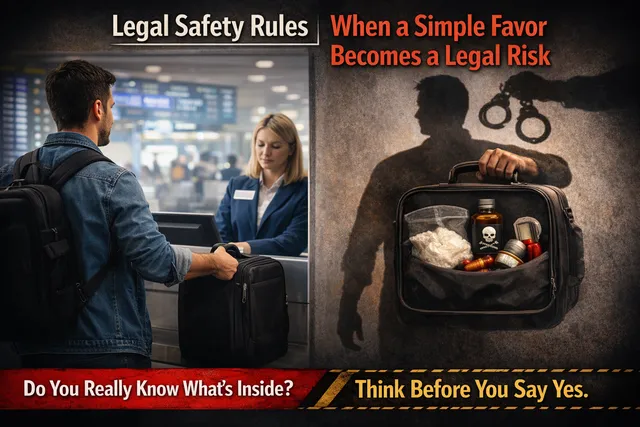
LEGAL SAFETY RULES — Issue 17 — When …
At the airport, everything moves quickly. A long queue. A sli…
LEGAL SAFETY RULES — Issue 17 — When a Simple F…
At the airport, everything moves quickly. …

LEGAL SAFETY RULES — Issue 18 — AI Ca…
There is a growing trend that many people do not talk about enough. Wh…
LEGAL SAFETY RULES — Issue 18 — AI Can Write. B…
There is a growing trend that many people do not …

One Country, Multiple Court Systems: A …
Ask a newly arrived general counsel to sketch the UAE court system on a whitebo…
One Country, Multiple Court Systems: A Practition…
Ask a newly arrived general counsel to sketch the…