
UAE Sports Governance: A Modern Framework for Global Ambition
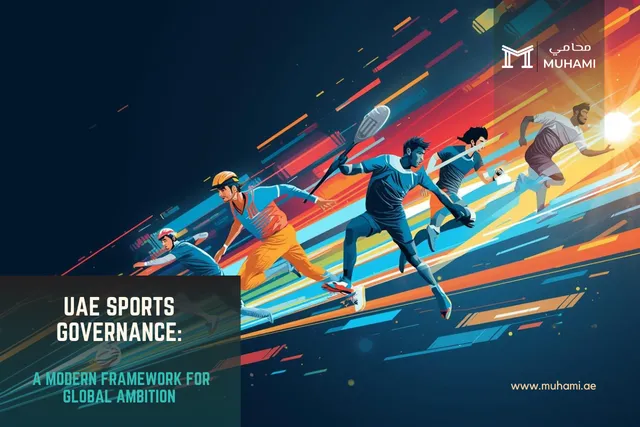
The UAE's sports law landscape is governed by Federal Law No. 4 of 2023 and its Executive Regulation (Cabinet Resolution No. 46 of 2024) (the “Executive Regulation”), establishing a comprehensive framework that addresses traditional sports and emerging sectors while emphasising professional management, athlete welfare, and sustainable development.
Regulatory Structure
In July 2024, the UAE restructured its sports governance through Federal Decree No. 28 of 2024, transforming the General Authority for Sports (established in 2008) into the Ministry of Sports (the “Ministry”). This elevation to ministerial status reflects the sector's strategic importance and creates a centralised regulatory body with enhanced coordination capabilities across federal and local levels.
The Ministry works closely with sports councils established across different emirates, creating a balanced system enabling both centralised policy-making and localised implementation. The Executive Regulation clarifies the Ministry's role and responsibilities, providing detailed guidelines for coordination between federal and local authorities, while precisely defining the duties of the UAE National Olympic Committee.
Sports Clubs and Corporate Governance
The Executive Regulation outlines specific corporate governance principles and financial sustainability metrics for sports clubs, requiring transparent financial records and robust risk management systems. Detailed licensing requirements address infrastructure needs, youth development programs, and technical standards that align with international best practices while considering local market conditions.
Athlete Protection and Development
The framework establishes detailed regulations for employment contracts, transfer procedures, medical care, and insurance coverage for athletes. Minimum standards for training conditions and competition participation are complemented by structured post-career transition support programs. Anti-doping measures aligned with international standards are implemented through the UAE Sports Arbitration Centre, which provides swift and fair dispute resolution.
Investment and Commercial Development
The Executive Regulation provides comprehensive guidelines for public-private partnerships in sports infrastructure development, including specific criteria for revenue sharing models and investment protection. Detailed frameworks govern commercial rights management, including broadcasting and sponsorship agreements, facilitating development of state-of-the-art facilities for international events while integrating with broader tourism development initiatives.
Emerging Sports and Innovation
Demonstrating forward-thinking adaptability, the Executive Regulation provides specific implementation guidelines for emerging sectors such as esports, addressing digital rights management and online competition frameworks. Requirements for virtual asset governance promote technological integration in sports administration, while establishing criteria for sustainable facility management practices aligned with global environmental standards.
Strategic Vision
The regulatory framework aligns with the National Sports Strategy 2031, establishing clear metrics and timelines for increased community engagement in physical activities and development of local sporting talent. The strategy aims to enhance global competitiveness in professional sports while ensuring sustainable growth of the sports ecosystem.
As the UAE continues to position itself as a premier destination for major international sporting events, the modernised governance framework provides the legal infrastructure necessary to support this ambition while protecting athlete welfare and promoting sustainable development.
Any Questions?
Connect with lawyers and seek expert legal advice
Share
Find by Article Category
Browse articles by categories
Find Article by Practice Area
Browse articles by practice area
Featured Partnership
Lawcloud
LawCloud: All-in-One Legal Practice Software
Related Articles
What Most People Don't Know About CBDCs
Imagine waking up one morning to discover that the cash in your wallet has beco…
What Most People Don't Know About CBDCs
Imagine waking up one morning to discover that th…
Family Foundations & Tax treatment in t…
A correctly structured Family Foundation can be a powerful tool for holding U…
Family Foundations & Tax treatment in the UAE
A correctly structured Family Foundation can be…

Accepting Crypto Payments in the UAE: M…
Quick Answer A UAE business cannot simply accept cryptocurrency for its good…
Accepting Crypto Payments in the UAE: Merchant Sa…
Quick Answer A UAE business cannot simply acce…

LEGAL SAFETY RULES — Issue 17 — When …
At the airport, everything moves quickly. A long queue. A sli…
LEGAL SAFETY RULES — Issue 17 — When a Simple F…
At the airport, everything moves quickly. …

LEGAL SAFETY RULES — Issue 18 — AI Ca…
There is a growing trend that many people do not talk about enough. Wh…
LEGAL SAFETY RULES — Issue 18 — AI Can Write. B…
There is a growing trend that many people do not …
One Country, Multiple Court Systems: A …
Ask a newly arrived general counsel to sketch the UAE court system on a whitebo…
One Country, Multiple Court Systems: A Practition…
Ask a newly arrived general counsel to sketch the…