
How to Build a Probation Policy That Actually Improves Retention
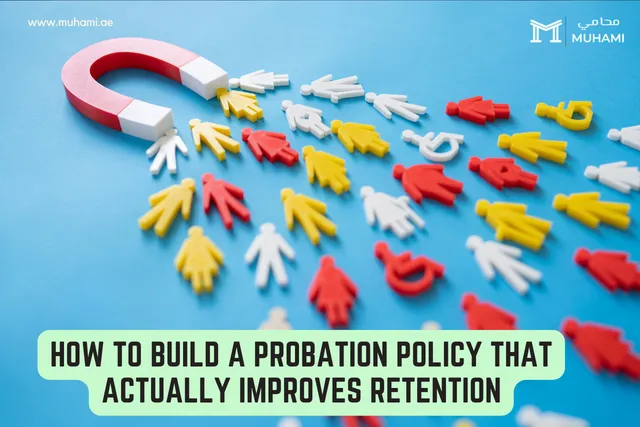
For many UAE companies, probation is seen as a simple risk window; a trial period to assess whether a new hire is a good fit before making a long-term commitment. But in reality, probation is one of the most critical stages of the employee lifecycle. It’s not just a filter for performance issues; it’s a powerful opportunity to build loyalty, align expectations, and significantly reduce early attrition.
In today’s competitive market, particularly within finance, technology and fast-growing startups, the cost of early turnover is steep. Beyond the administrative hassle of cancelling visas and rehiring, there’s a deeper cultural cost when new hires disengage or plan their exit before they’ve even settled in.
Probation Should Be a Two-Way Process
A common mistake many organisations make is treating probation as a one-sided trial. The employer observes while the employee tries to “figure things out” — often without clear direction, consistent feedback, or an understanding of what success actually looks like.
A better approach is to treat probation as a shared journey. It should be structured, interactive and built on regular check-ins and guidance. When handled well, it not only helps employers make informed decisions but also helps new employees feel valued, supported and connected to the company culture from day one.
What Should a Good Probation Policy Include?
A strong probation policy starts with clarity. The duration should be clearly stated in employment contracts, in line with UAE Labour Law (or DIFC Employment Law or ADGM Employment Regulations if employed in one of these freezones), which allows a maximum of six months. Employees should also be informed of their notice period during probation.
Beyond legal compliance, a well-designed policy should outline how and when progress will be reviewed. Many successful organisations use 30, 60 and 90-day review checkpoints. These reviews don’t have to be overly formal, but they should be structured enough to allow for open, constructive discussion. They provide opportunities to:
- Give honest, actionable feedback
- Identify and remove early roadblocks
- Ensure alignment on goals and expectations
Defining what successful completion looks like is equally important. Managers should outline the key performance indicators, behavioural standards and cultural expectations that represent a strong fit. This clarity helps employees focus their efforts and ensures fair, transparent decisions at the end of probation—whether it leads to confirmation, extension or parting ways.
The Emotional Experience of Probation
Many companies underestimate how emotionally intense the probation period can feel for new employees. Even seasoned professionals enter new roles with a sense of vulnerability—navigating new systems, teams and expectations, all while trying to make a strong impression.
If a probation policy focuses only on timelines and targets, it misses the human side of onboarding. Employees need an environment where they feel safe to speak up, ask questions and express concerns. Encouraging open dialogue, recognising early wins and celebrating small successes helps create psychological safety.
Retention isn’t only about performance—it’s about connection. People stay where they feel seen, supported and secure. The probation period is your first and best opportunity to show them they made the right choice.
The Manager’s Role in a Successful Probation
While HR can provide structure and guidance, the direct manager plays the most critical role in a new hire’s probation experience. Managers interact with new employees daily, shape their workload and influence how supported they feel.
Managers should therefore be equipped and accountable for the entire probation journey; from setting clear objectives to giving feedback and deciding on confirmation. HR’s role is to enable, not to own, this process.
When probation concludes, the confirmation process should be as intentional as onboarding. A short review meeting, followed by formal communication of the outcome, reinforces progress and signals continued growth. Without this step, employees are often left unsure of their status or value to the organisation.
Local Considerations for UAE Employers
UAE employers must also consider legal and cultural nuances when building their probation policies. For instance, the timing of health insurance coverage, annual leave accrual and end-of-service benefits may vary based on company policy. In addition, if bonuses, airfare or allowances are conditional on confirmation, these details should be communicated transparently from the start and clearly written in the employment contract.
A Tactical Tool, Not Just a Legal Clause
Probation should not be treated as a contractual technicality. It’s a strategic tool to confirm mutual fit, build trust, and ensure new hires are set up for long-term success.
Whether your organisation has ten employees or one hundred, designing a probation process that supports rather than filters will lead to stronger teams, lower turnover and a more engaged culture.
For startups or SMEs without a dedicated HR function, a probation framework might feel like unnecessary paperwork, but structure doesn’t have to mean complexity. Even a lightweight approach built on clear expectations, regular check-ins, and empathy can make a measurable impact on retention and engagement.
Making Probation Supportive and Engaging
The most effective probation experiences are often the simplest. If you want your company to stand out, don’t just assess performance—create an experience that makes new hires feel genuinely valued from day one.
Try:
- A clear 30, 60 and 90 day plan so employees know what success looks like
- Assigning a buddy or welcome coach to help them settle in
- Scheduling regular informal check-ins simply to ask, “How are you finding things?”
- Recognising completion with a personal note or small celebration
These small, thoughtful gestures can transform the probation period from a test into a warm welcome. When people feel appreciate, not just assessed, they’re far more likely to stay and thrive.
Any Questions?
Connect with lawyers and seek expert legal advice
Share
Find by Article Category
Browse articles by categories
Featured Partnership
Lawcloud
LawCloud: All-in-One Legal Practice Software
Related Articles

LEGAL SAFETY RULES — Issue 20 — The Inv…
🌍 Global Edition The principles discussed in this article are broadly applic…
LEGAL SAFETY RULES — Issue 20 — The Investment Th…
🌍 Global Edition The principles discussed in t…

How do you keep control of your UAE com…
Quick Answer You keep control of an onshore UAE company at Series A by combi…
How do you keep control of your UAE company throu…
Quick Answer You keep control of an onshore UA…

LEGAL SAFETY RULES — Issue 19 — When …
🌍 Global Edition The legal principles discussed in this article are br…
LEGAL SAFETY RULES — Issue 19 — When Your Dream…
🌍 Global Edition The legal principles di…
Important ADGM Regulatory Updates
ADGM has recently introduced important regulatory upda…
Important ADGM Regulatory Updates
ADGM has recently introduced impor…
What Most People Don't Know About CBDCs
Imagine waking up one morning to discover that the cash in your wallet has beco…
What Most People Don't Know About CBDCs
Imagine waking up one morning to discover that th…
Family Foundations & Tax treatment in t…
A correctly structured Family Foundation can be a powerful tool for holding U…
Family Foundations & Tax treatment in the UAE
A correctly structured Family Foundation can be…